

Current Issue
Editorial
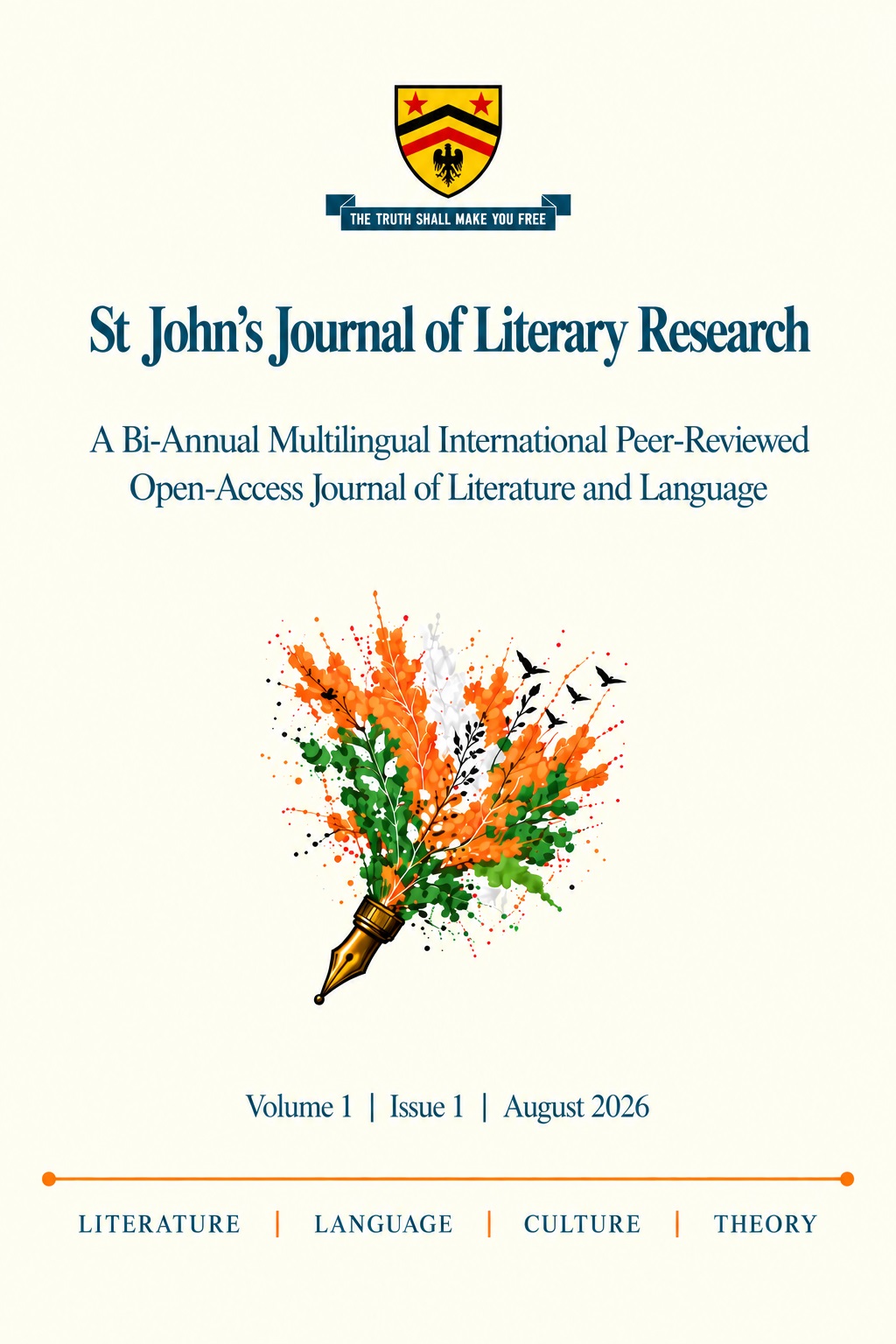
It gives us immense pleasure to present the inaugural issue of St John’s Journal of Literary Research, published by St John’s College, Agra. This first issue brings together a stimulating range of scholarly engagements across English, Hindi, Urdu and Sanskrit, reflecting the intellectual diversity that characterises literary and cultural research today.
The contributions in this volume demonstrate that literature is never isolated from the larger questions of human existence. The comparative study of Saadat Hasan Manto’s Khol Do and Roberto Benigni’s Life Is Beautiful, for instance, brings the Holocaust and Partition into conversation through the shared experience of parental anguish, historical trauma and the struggle to preserve childhood innocence. Similarly, the study of Arundhati Roy’s The God of Small Things examines how caste, gender, childhood and collective trauma intersect, revealing how apparently private suffering can embody deeper social injustices.
The issue also extends literary inquiry into contemporary concerns. The discussion of Emotional Intelligence foregrounds self-awareness, empathy, self-management and social skills, proposing a broader understanding of human capability beyond conventional notions of IQ. The Hindi contributions, meanwhile, recover the historical significance of journalism as an instrument of linguistic development, national consciousness and social reform, while also exploring an indigenous approach to research referencing through the HSS Format.
The Sanskrit scholarship further enriches this dialogue by revisiting traditional education and examining representations of women through the evidence of grammatical texts.
The issue further opens a window into the rich intellectual traditions of Urdu literature. The studies of Mir Taqi Mir explore the extraordinary generation of meaning through emotion and feeling, his reimagining of tragedy through the experiences of ordinary people, and the psychological dimensions of his poetic personality. Complementing this is a study of Sufism that foregrounds its enduring relationship with humanity, spirituality, creative thought, peace and respect for multicultural beliefs.
Taken together, these studies affirm our conviction that literary research must remain attentive to history, society, language, culture and the human condition. We hope this inaugural issue encourages dialogue across disciplines and languages and becomes a meaningful platform for rigorous, original and socially responsive scholarship.
— Chief Editor
St John’s Journal of Literary Research


